Why It Matters to Check Qualifications in Equine-Assisted Services
Equine-assisted services (EAS) can be transformative—improving confidence, emotional regulation, boundaries, communication, and overall well-being. But like any professional field involving vulnerable people and large animals, it must be grounded in competence, ethics, and safety.
That’s why checking a provider’s qualifications, experience, insurance, and safeguarding standards is not optional; it’s essential.
It’s also important to be aware that not all equine-assisted services and qualifications are the same.
For example, someone qualified to provide equine-assisted learning sessions may not be qualified in therapeutic horseback riding - and vice versa.
1. Horses Are Not Props. They Are Powerful, Sensitive Animals
Working safely with horses requires significant hands-on skill. A properly trained equine-assisted professional understands herd behavior, body language, risk management, welfare, and how to maintain a safe learning environment.
Unqualified individuals may not recognize early warning signs or be aware of contraindications, putting participants and horses at risk.
2. Participants Deserve Evidence-Based, Ethical Support
Good equine-assisted work is not guesswork. It’s grounded in psychology, coaching principles, learning theory, and ethical frameworks. Professionals invest heavily in training, accreditation, CEUs, supervision, first aid, and safeguarding.
If someone cannot clearly articulate their training pathway, code of ethics, and insurance coverage, that’s a big red flag.
3. Professional Standards Protect Everyone
Anyone offering sessions (paid or not) must have:
-Accreditation for the service they are offering
- Liability Insurance, including equine-specific coverage
- Credentialed professionals
- Clear risk assessments and welfare policies
These aren’t bureaucratic boxes to tick. They are the safety net for participants, horses, volunteers, staff, and the reputation of the entire industry.
4. The Industry Deserves Better
Equine-assisted services change lives when done professionally. But the work is only as safe as the ethics and competence of the person facilitating it. So before booking a session—for yourself, your child, or your organization—ask these simple questions:
- What qualifications do you hold, and who accredited them?
- Are you insured to deliver equine-assisted work specifically?
- How many years of hands-on experience do you have with horses?
- What safeguarding and first-aid training do your staff and volunteers have?
Professional providers will welcome these questions. Those who are evasive are already telling you everything you need to know.
In Summary
The integrity of equine-assisted services depends on rigorous standards. Qualified providers train hard, invest heavily, and hold themselves accountable. Participants deserve the safety and professionalism that comes with choosing people who do this work to the highest standard.
Because when the work is done with competence, care, and respect—for the participant and the horse—the results are extraordinary.

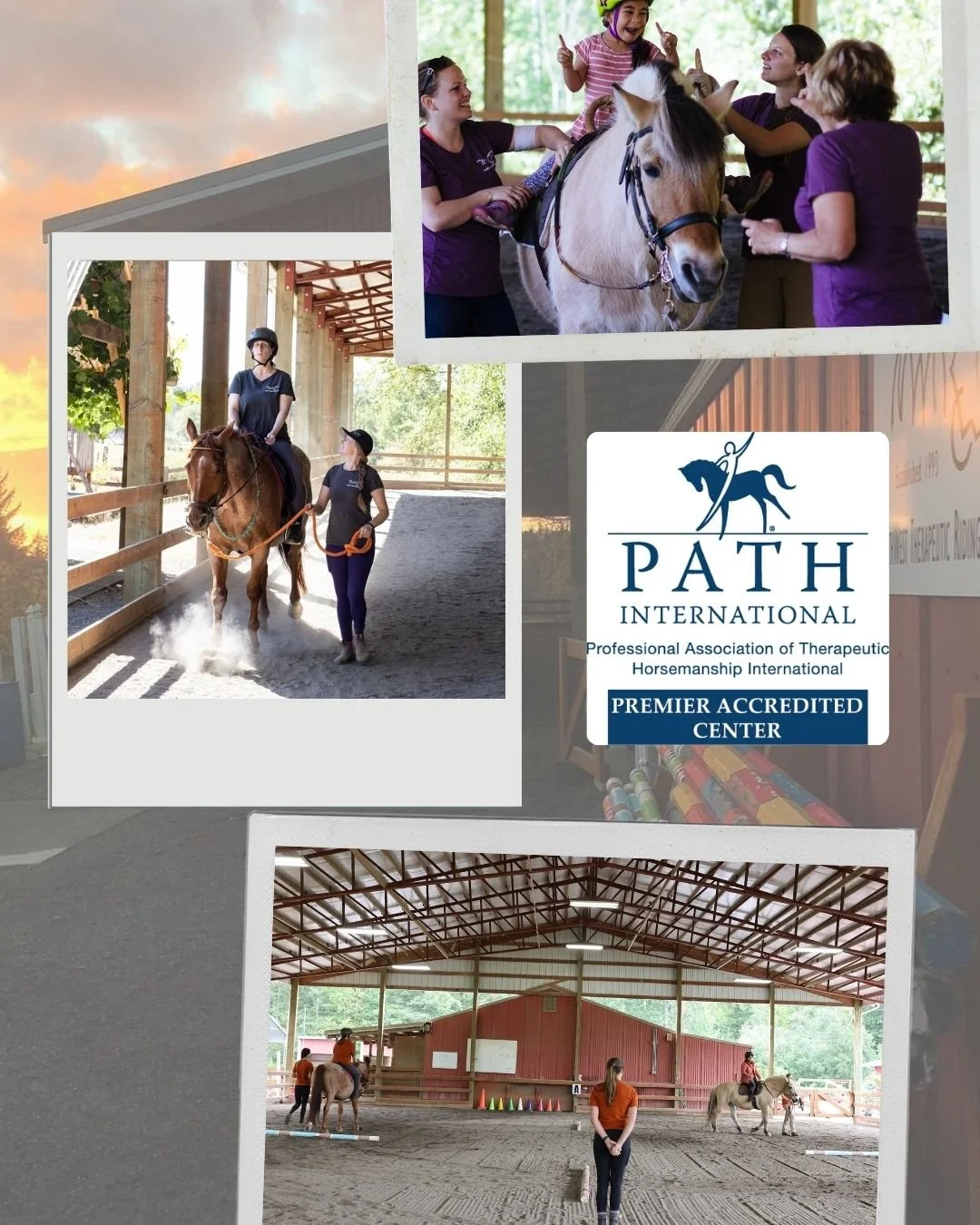
NorthWest Therapeutic Riding Center is proud to be a Professional Association of Therapeutic Horsemanship (PATH) Intl. Premier Accredited Center.
NWTRC’s instructors undergo rigorous training and are professionally credentialed by PATH Intl.